
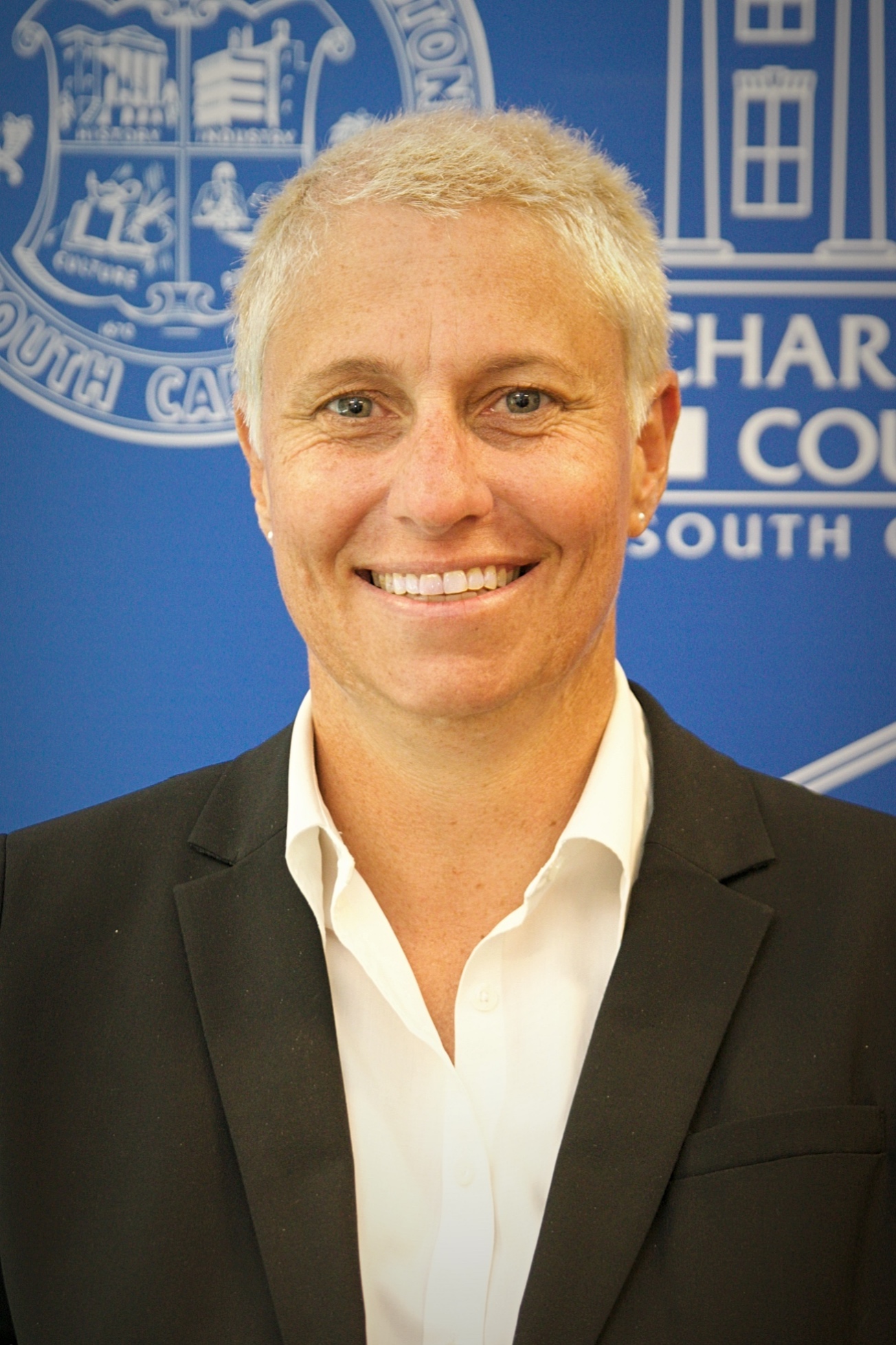
Lauren Knapp is a nationally recognized public safety leader and counterterrorism expert with over two decades of distinguished service in law enforcement, intelligence, and threat management. She currently serves as Counter Threat Manager for the Charleston County Government Department of Public Safety, where she leads threat prevention and response across six divisions. Her career spans federal fellowships at the National Counterterrorism Center, landmark contributions to high-profile federal prosecutions, the development of nationally adopted intelligence models, and the securing of more than $7.1 million in federal funding to combat human trafficking. A sought-after speaker, trainer, and subject matter expert, Lauren has addressed international audiences, advised federal agencies, and shaped the next generation of public safety and election security leadership.
As Counter Threat Manager for Charleston County Department of Public Safety, Lauren oversees the threat prevention and response mission for six critical divisions: the 911 Consolidated Dispatch Center, Emergency Medical Services, Emergency Management, the Tri-County Biological Science Center, Awendaw Fire Department, and the Criminal Justice Coordinating Council. In this capacity, she supervises policy development and implementation, directs strategic partnerships with federal, state, and local agencies, and leads training and preparedness initiatives to ensure Charleston County remains resilient in the face of evolving threats.
Among her most significant accomplishments in this role is her leadership of Charleston County’s comprehensive election security strategy, now recognized as a national best practice model. This initiative integrated cross-sector coordination, real-time threat assessment, and physical and cyber risk mitigation to ensure secure and transparent elections. As a result, Lauren has become a leading national voice on election security.
She serves as a Subject Matter Expert and Speaker for the Brennan Center for Justice and the Committee for Safe and Secure Elections and has been featured as a quoted expert in an election security white paper. She has contributed to national election security credentialing programs through George Washington University and The Elections Group and has spoken at the National Homeland Security Conference on Election Security in 2023 and 2024.
Lauren’s career is marked by several landmark contributions to public safety and federal law enforcement. As Senior Intelligence Officer in the Charleston County Sheriff’s Security Threat Analysis Division (2014–2018), she built and led a secure jail intelligence collection team whose work directly contributed to key testimony and federal evidence in the Dylann Roof hate crime case, successfully prosecuted by the Department of Justice in 2017. The correctional intelligence model she developed was subsequently adopted for national use.
Prior to that, she served as an Analyst at the Seahawk Interagency Operations Center under the City of Charleston and DHS (2010–2014), where she was selected by Command Staff to establish an Intelligence Working Group (IWG) with federal, state, and local entities to analyze port operations and intermodal threat trends. She also served as Crime Intelligence Officer for the City of Charleston (2008–2010) and as an Agent with South Carolina Probation, Pardon, and Parole Services (2004–2008), supporting the successful reintegration of over 1,000 court-supervised individuals.
Upon returning from her NCTC fellowship in November 2019, Lauren was named Counter Threat Coordinator for the Charleston County Sheriff’s Office, overseeing the Human Trafficking Unit focused on worldwide migrant smuggling, trafficking in persons, and clandestine terrorist travel.


