
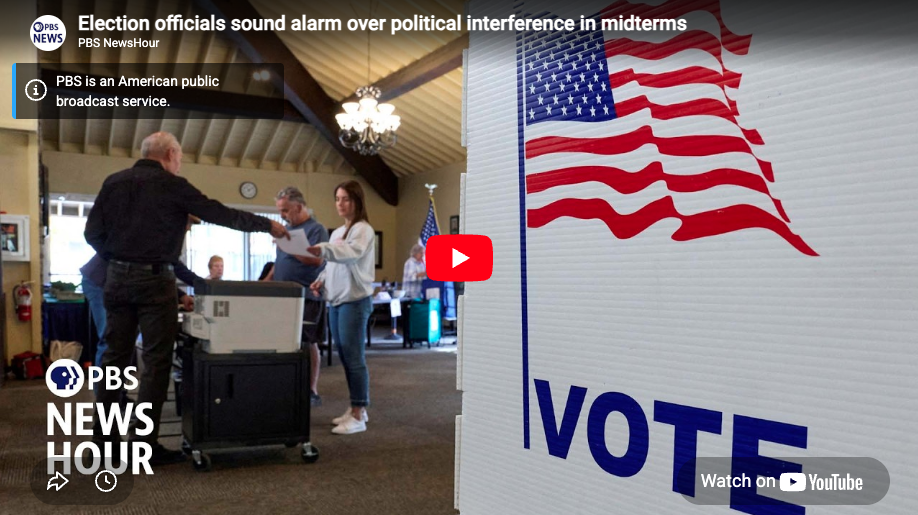
PBS NewsHour: What It Takes To Run A Safe & Secure Election In 2026
In a recent segment on PBS NewsHour, two of CSSE’s members—Derek Bowens, the Director of Elections in Durham County, North Carolina and Scott McDonell, the County Clerk in Dane County, Wisconsin—offered a real look at the realities of administering elections in today’s environment.
Their message was both sobering and reassuring: the threats facing election officials are real, but so is the preparation happening behind the scenes to meet them.
A Changing Threat Environment
Election administration has always required precision and planning. But in recent years, the role has expanded far beyond logistics and operations.
Today’s election officials must also navigate a complex and evolving threat landscape—one that includes not only physical safety concerns, but also misinformation, digital vulnerabilities, and coordinated attempts to disrupt public confidence.
As Bowens and McDonnell describe, this is no longer theoretical. It’s part of the job.
Preparation Is the Difference
What often goes unseen is the level of coordination required to ensure elections run smoothly despite these challenges.
Across the country, election officials are working more closely than ever with law enforcement, emergency responders, and IT professionals to prepare for a wide range of scenarios—from bomb threats and swatting incidents to cyber disruptions and misinformation campaigns.
This kind of preparation mirrors how communities plan for major events. It’s deliberate, collaborative, and constantly evolving.
The 2024 election cycle, while not without threats, was widely regarded as safe and secure—due in large part to this proactive coordination.
The Human Element
At the center of this work are the people administering our elections. As the PBS segment highlights, election officials are balancing immense responsibility under increasing pressure. Many operate in under-resourced environments, yet continue to show up, adapt, and deliver for their communities.
Their work is often invisible when it succeeds—but essential to the functioning of our democracy.
Why This Work Matters Now
Looking ahead to 2026, the stakes are clear.
Threats are evolving. Tactics are becoming more sophisticated. And the need for strong, trusted partnerships between election officials and law enforcement has never been greater.
CSSE exists to bridge the gap between election administration and law enforcement, providing the training, resources, and relationships needed to prevent and respond to threats before they escalate.
Because safe and secure elections don’t happen by accident. They’re built—through preparation, coordination, and trust.
Related News
Get Involved


Law Enforcement Quick Reference Guides summarize key penal provisions found within state law.