
Why CSSE Created Election Quick Reference Guides for Law Enforcement
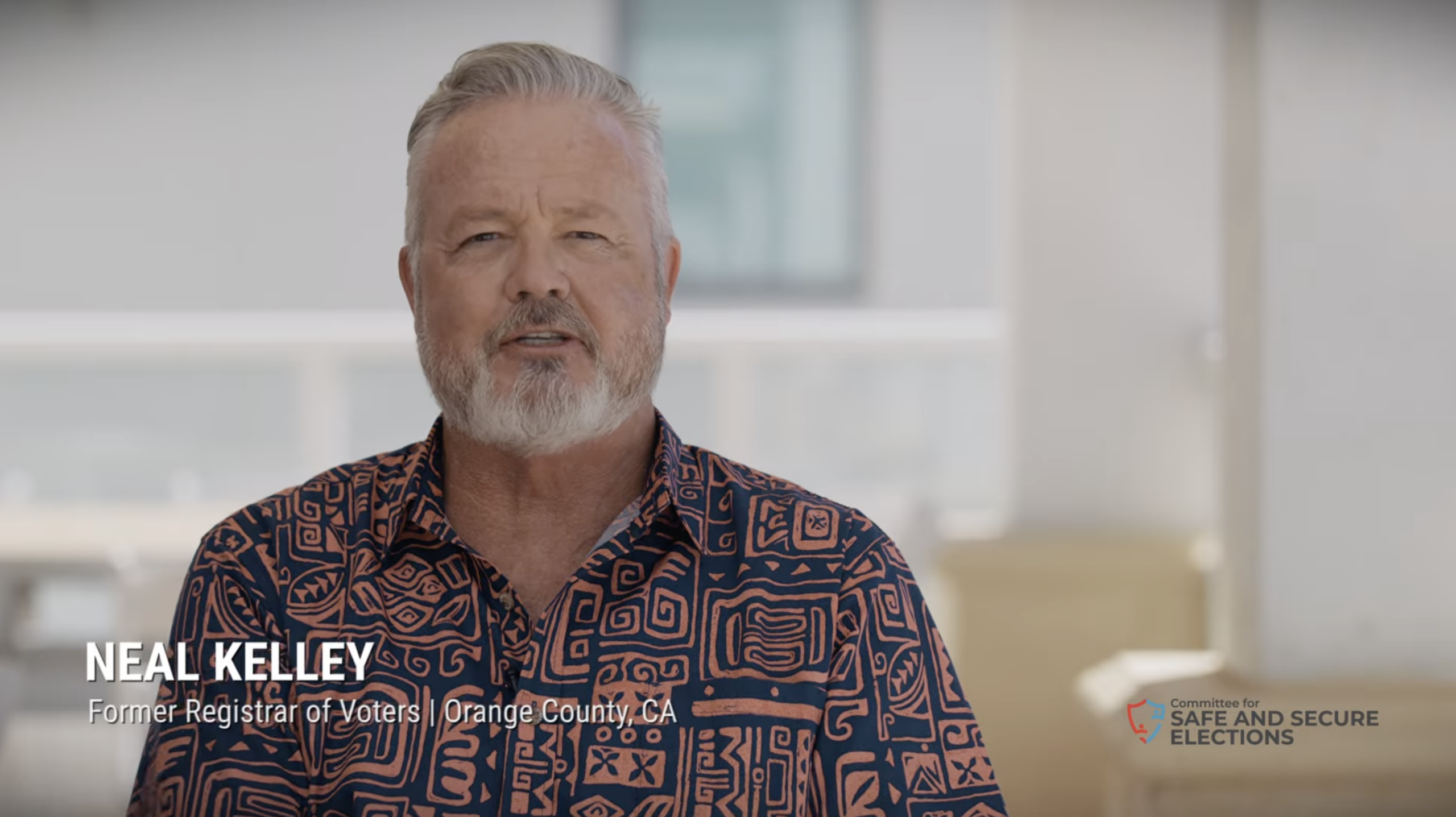
CSSE founding member Neal Kelley explains how a real polling place incident inspired the creation of state-specific Law Enforcement Quick Reference Guides that help officers navigate election law and support election officials.
What happens when a police officer responds to an incident at a polling place?
For most law enforcement professionals, the answer isn’t always straightforward.
Election law is unique. It varies from state to state, involves specialized rules and procedures, and often intersects with public safety responsibilities in ways that officers may only encounter once every few years.
That’s one of the reasons the Committee for Safe and Secure Elections (CSSE) created its Law Enforcement Quick Reference Guides.
In a new video, CSSE founding member Neal Kelley—former Orange County Registrar of Voters and a former law enforcement officer—shares the real-world experience that inspired the guides.
“As a former law enforcement officer, I used to carry around a pocket guide for vehicle code sections,” Kelley explains. “And so I thought, why not do this for elections?”
The idea became even more relevant after Kelley witnessed a situation at a polling place involving candidates and voters. Local police responded quickly and professionally, but the incident revealed a challenge that exists in communities across the country: officers may be familiar with criminal statutes but not necessarily the election laws that can apply inside a voting location.
“Clearly there was a gap between what local law enforcement knew and what election officials were trying to convey,” Kelley says.
The Law Enforcement Quick Reference Guides were designed to close that gap.
Each state-specific guide provides officers with concise information about election laws, polling place operations, voter protections, and common election-related scenarios they may encounter while on duty. The goal is simple: ensure law enforcement and election officials are working from the same playbook when responding to incidents involving voters, polling locations, election workers, or election infrastructure.
For election officials, the guides provide confidence that responding officers have access to the information they need. For law enforcement, they offer a practical field resource that can help support informed decision-making during fast-moving situations.
Watch the video to hear Neal Kelley explain how a simple idea evolved into one of CSSE’s most widely used resources.
Related News

Get Involved


Law Enforcement Quick Reference Guides summarize key penal provisions found within state law.